IITA


REGIONAL PROGRAM

TECHNOLOGY & RESEARCH

To display or download the more detailed .pdf version of this page, click on the pdf icon (212 kb)
[Note: To read .pdf files you will need Adobe Acrobat Reader. If you do not have it installed on your computer, click on our tools page, where links for downloads are provided]

Technology Delivery, Research and Impact Regional Project

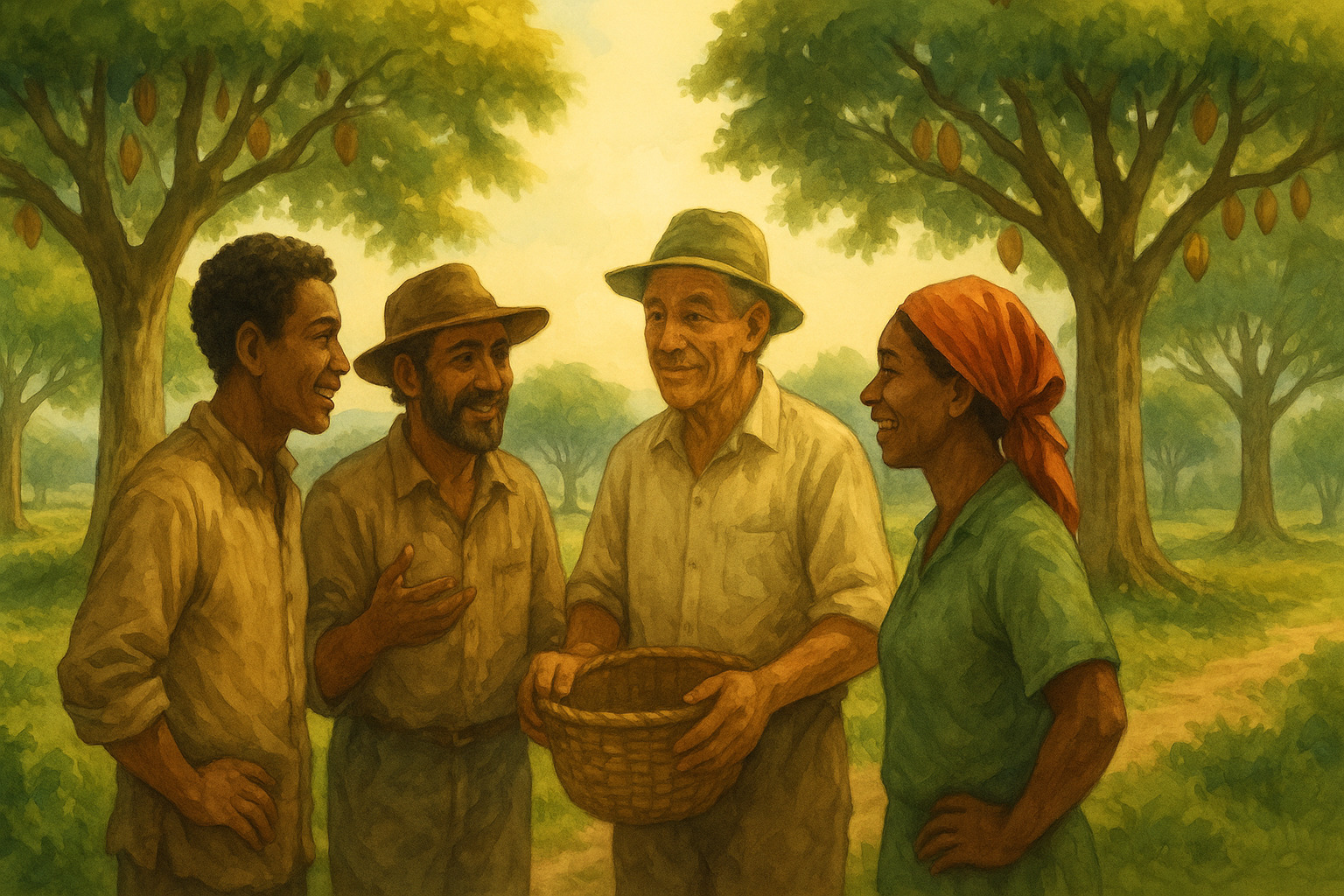
Current global cocoa production is highly concentrated in West Africa where two major producers -- Cote d' Ivoire and Ghana -- make up for almost 60% of the total world output totalling nearly 1,800,000 t in the 2000/2001 crop year. Cocoa is mainly produced at smallholder farms and it is the major source of income for these households, as well as for numerous landless agricultural workers. Despite the large share of cocoa in national incomes, producing countries are characterized by slow agricultural growth, poverty, falling wages, and stagnant economies.

In addition, the threat from cocoa pests and diseases coupled with old age of some farms and depletion of soil fertility, are increasingly causing significant reductions in yield/ha of cocoa and quality deterioration. Furthermore, concern has been expressed regarding the capacity of available resources and technologies to increase and sustain long-term cocoa productivity. Research on the foundations of sustainable cocoa production systems with minimal environmental degradation will require an approach that takes into consideration the natural resource base. Hence, the full potential of cocoa to contribute to agricultural growth can be attained by implementing targeted agricultural research and technology dissemination aimed at increasing productivity in a sustainable fashion. The main challenge will be exploiting new technological opportunities.

To support the pilot projects, a regional strategy for research and technology dissemination is proposed to increase and sustain cocoa productivity and quality in a wider range of socio-economic settings of the STCP participating countries in West Africa. The plan is to transform the way cocoa is being produced through several technological advances. At the hearth of this transformation will a move to technology dissemination using participatory approaches such as the farmer field schools and increased co-operation among research organisations across the region within a participatory approach to research. This way technology adaptation to local conditions will be faster. The design principle surrounding the concept is that such strategy can attain the full potential of cocoa to reduce poverty by improving the economic well being of smallholders and the environmental sustainability of their tree crop systems.

The use of "focal research centres" for technology development in an area of similar agroecological attributes of those found in the region is expected to increase the application of technologies, with comparatively little adaptation, in the other countries. The primary aim of the project is to disseminate and develop environmentally sound and productivity-enhancing technologies for use by smallholder tree crop farmers and other users.

Within the project vision, plans are to build on of the most successful research results produced by STCP and globally. Policy options will be developed to influence government policies. Scientists, extension services, targeted farmer groups and development agents will be pooled together in a multidisciplinary and participatory fashion to address key issues within a community focus. STCP will communicate innovative solutions to all interested parties globally.

At the end of the three-year project timeframe, best technology innovations, developed and disseminated in the region, will be in use by farmers.

For programmatic purposes, the project will comprise seven themes:
  1. Post-harvest quality improvement
  2. Germplasm improvement and production of quality planting materials
  3. Integrated pest and disease management
  4. Rehabilitation of existing smallholder tree crop farms
  5. Establishment of tree crops on deforested lands
  6. Valuing environmental services
  7. Impact of innovations